
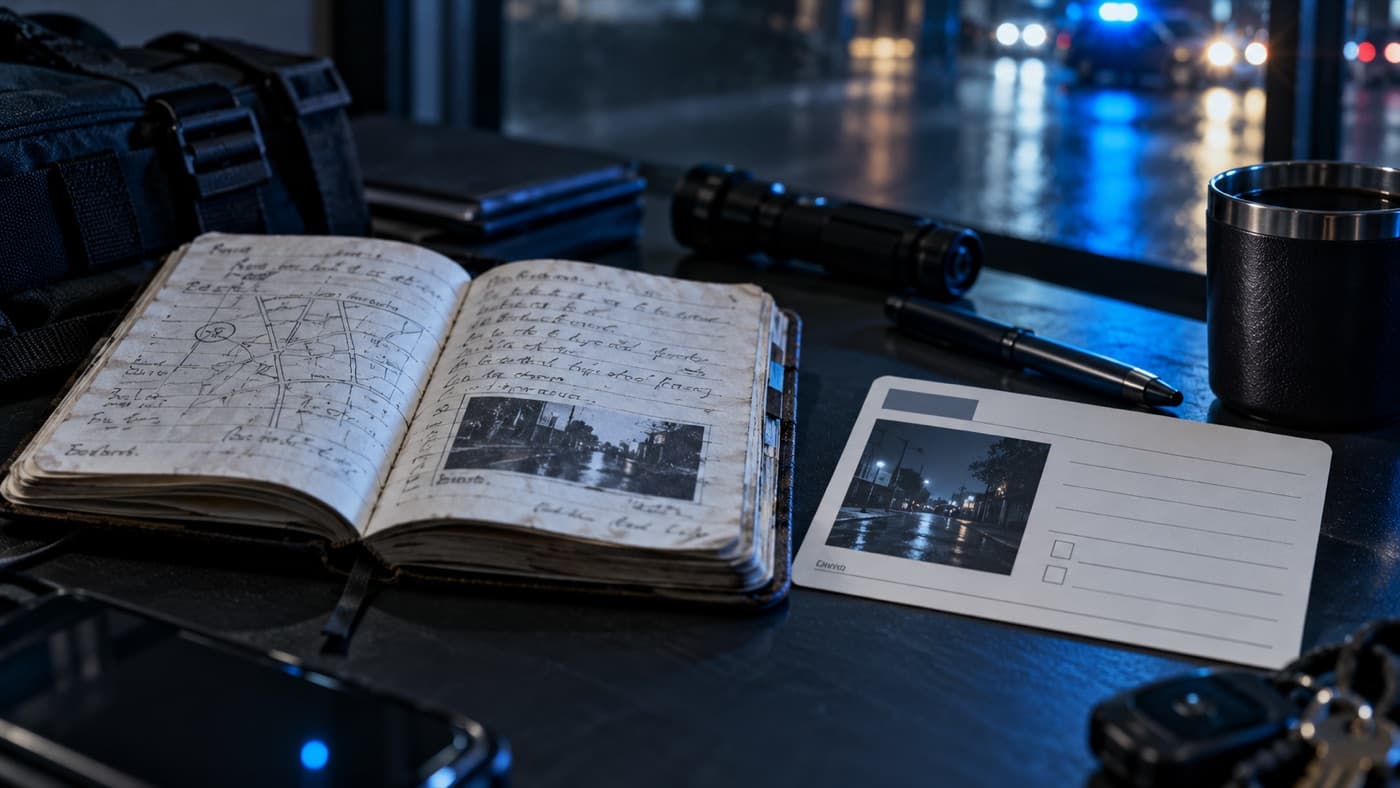
Officers may return to a traffic case long after the encounter. A good preparation routine helps reconnect the case to timely records without pretending that every detail can be reconstructed.
Document under approved practices
Use the agency's required methods for notes and records. Keep identifiers and the sequence understandable. Do not replace official documentation with a personal app or upload information that policy does not permit.
Link records to the correct encounter
Dates, locations, vehicle details and summons references help separate similar cases. Confirm those identifiers when reopening a draft. A familiar violation or repeated intersection is not enough to establish that you found the right matter.
Separate recollection from recorded information
When preparing later, identify what you independently remember and what comes from a permitted record. Follow applicable rules on reviewing and using records. A blog cannot determine whether a particular document or preparation method is permitted at your hearing.
Keep limitations honest
Do not use a generic example to supply weather, distance, timing or statements that you cannot support. An automated draft can arrange supplied information, not retrieve facts from an encounter it never observed.
Review before improving style
Compare each sentence against the authorized source material. Correct case identifiers and chronology before polishing language. Remove unsupported certainty even when it makes the account sound smoother.
Make future review easier
Saved testimony drafts keep preparation work with extracted summons information so an officer can return and edit. They do not replace original notes or guarantee accurate recall. Use organization to support careful review, not to manufacture a fuller memory.
Use the workflow in NinetySix
NinetySix is available directly on the web and on iPhone. Explore this NinetySix workflow, use NinetySix online, or review current plans. Follow agency requirements for the information you enter, and check your draft against your original records before use.