 NinetySix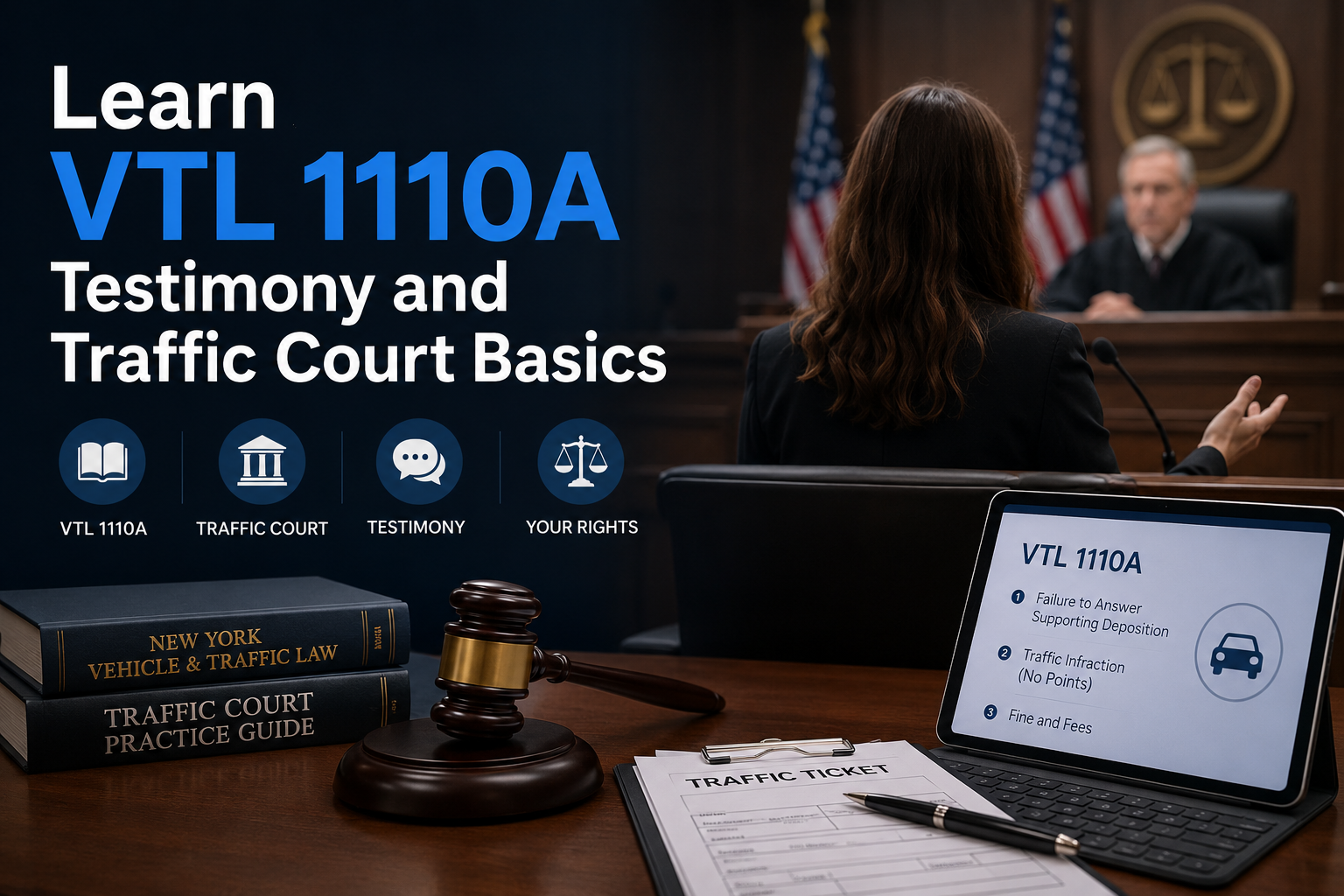
Traffic laws help keep roads safe for everyone. Drivers, cyclists, and pedestrians all depend on these rules every day. When someone breaks a traffic law in New York, a police officer may issue a traffic summons. Later, the officer may need to explain what happened in court. This explanation is called testimony.
Many officers and drivers want to understand VTL 1110a testimony because it is one of the most common traffic violations in New York. Learning how testimony works also helps people understand the legal process better.
In this guide, you will learn what VTL 1110A means, how testimony is presented, and why clear documentation is important. We will also look at other common traffic violations that often appear in New York traffic court.
What Is VTL 1110A?
VTL stands for Vehicle and Traffic Law.
Section 1110A requires drivers to obey official traffic control devices unless a police officer directs traffic differently. These devices include:
- Traffic lights
- Stop signs
- Yield signs
- Lane control signs
- Road markings
- Electronic traffic signals
If a driver ignores one of these traffic control devices, an officer may issue a summons.
During court, the officer explains exactly what happened. This explanation becomes the VTL 1110a testimony presented before the judge.
Why Testimony Matters
A traffic summons alone does not explain every detail of an incident.
The officer's testimony helps the judge understand:
- What the officer observed
- Where the violation happened
- Which traffic device was ignored
- How the driver reacted
- Why was the summons issued
Therefore, clear testimony plays an important role in traffic court.
Good testimony should always match the officer's notes and the information written on the summons.
What Should VTL 1110A Testimony Include?
Every testimony should tell a clear story.
Most officers include these important details:
Date and Time
Start with the exact date and time of the incident.
Location
Mention the street names, direction of travel, and nearby landmarks if needed.
Traffic Control Device
Explain which traffic control device was present.
Examples include:
- Stop sign
- Red traffic signal
- One-way sign
- Lane direction sign
Driver's Actions
Describe exactly what the driver did.
Avoid guessing or adding opinions.
Only explain what was personally observed.
Traffic Conditions
Mention weather, visibility, and road conditions if they affected the event.
Enforcement Action
Finally, explain that a summons was issued for violating the applicable section of the Vehicle and Traffic Law.
Simple Example of Testimony
Every case is different, but testimony usually follows a logical order.
For example:
"On June 15 at approximately 8:30 AM, I observed a vehicle traveling eastbound approaching an intersection controlled by a stop sign. The driver failed to stop before entering the intersection. I had a clear view from my patrol vehicle. After safely stopping the vehicle, I identified the operator and issued a summons for violating VTL 1110A."
This is only a basic TVB testimony sample for learning purposes. Actual testimony depends on the facts of each case.
How Traffic Violation Testimony Helps the Court
Judges rely on facts.
They want testimony that is:
- Clear
- Accurate
- Honest
- Easy to understand
Strong Traffic violation testimony NY should never include assumptions or unsupported opinions.
Instead, officers should describe what they directly observed.
This approach improves credibility and helps the court understand the events.
Other Common Traffic Violations
Many traffic cases involve laws besides VTL 1110A.
Here are several common examples.
VTL 1111(d)(1)
This section usually relates to drivers who fail to obey traffic signal indications.
A clear VTL 1111d1 testimony explains:
- Signal color
- Driver's movement
- Officer's observation point
- Distance from the intersection
Every detail should remain factual.
VTL 1180(d)
This section commonly involves speeding violations.
A complete VTL 1180d speeding testimony may include:
- Posted speed limit
- Estimated or measured speed
- Method used to determine speed
- Weather conditions
- Road description
Accurate observations help support the testimony.
Traffic Rule 4-03(a)(1)
Some traffic cases involve city traffic rules instead of the Vehicle and Traffic Law.
A proper Traffic Rule 4-03(a)(1) testimony explains which local rule was violated and how the violation occurred.
Again, officers should focus only on observable facts.
Failure to Yield
Failure-to-yield violations often happen at intersections or crosswalks.
A clear Failure to yield NY testimony explains:
- Right-of-way
- Position of vehicles
- Actions of each driver
- Traffic controls at the location
Good documentation makes the testimony much easier to present.
Improper Turn
Improper turns happen when drivers ignore lane markings or traffic signs.
An effective Improper turn NY testimony describes:
- Direction of travel
- Lane position
- Posted signs
- Driver's turning movement
Simple and factual language works best.
Understanding NY Traffic Summons Information
Many drivers become confused after receiving a traffic summons.
Fortunately, each summons contains information that identifies the violation.
Officers often use a NY summons code lookup to confirm the correct offense before issuing a ticket.
Likewise, a NY traffic code search helps locate the proper Vehicle and Traffic Law section when reviewing paperwork.
Learning the correct section also provides a better NY violation code explanation, making the court process easier to understand.
Reviewing NY traffic summons examples can also help officers and drivers become familiar with common traffic violations.
Why Accurate Documentation Is Important
Traffic court depends on reliable records.
Small mistakes may create confusion later.
Therefore, officers should record important details immediately after the stop.
Good documentation should include:
- Exact location
- Time
- Direction of travel
- Weather
- Vehicle description
- Driver information
- Violation observed
These details help officers prepare accurate testimony when court dates arrive.
How Technology Helps Officers
Modern technology saves time and reduces paperwork.
Today, many departments and officers use digital tools to improve documentation.
Examples include:
- Digital note-taking
- Voice recording
- OCR technology
- AI-powered document processing
- Secure cloud storage
These tools improve efficiency while reducing manual work.
Digital Tools That Support Daily Police Work
Technology continues to improve law enforcement workflows.
Many officers now use a Police overtime recorder to organize overtime hours without keeping handwritten notes.
Similarly, department overtime tracking tools simplify payroll records and daily scheduling.
Some agencies also use a Police OCR summons tool that quickly reads printed summons information.
An AI summons reader can reduce typing by extracting important details from traffic documents.
Many officers benefit from Officer paperwork automation, especially during busy shifts with multiple summonses.
Modern software may also include a Traffic court testimony generator that organizes documented facts into a structured draft. Officers must always review and verify the final content before using it.
Likewise, a Summons to testimony app can connect summons information with officer notes, helping streamline report preparation.
Some departments also adopt a complete NY police documentation tool that stores reports, notes, and court information in one secure location.
Together, these solutions create a more efficient Law enforcement workflow tool for daily operations.
Tips for Better Traffic Court Testimony
Officers can improve testimony by following a few simple habits.
- Review notes before court.
- Speak clearly.
- Stay calm.
- Answer only the question asked.
- Avoid guessing.
- Use simple language.
- Describe facts in order.
- Stay professional throughout the hearing.
These habits improve confidence and help judges understand the testimony.
Common Mistakes to Avoid
Even experienced officers can make mistakes.
Avoid these common problems:
- Forgetting important details
- Adding personal opinions
- Guessing about events
- Using unclear language
- Mixing up locations
- Rushing through testimony
Instead, focus on accurate observations and complete documentation.
Conclusion
Understanding VTL 1110A testimony is important for both law enforcement officers and anyone interested in New York traffic law. Clear observations, accurate documentation, and organized testimony help the court understand exactly what happened during a traffic stop.
Modern technology also makes documentation easier. From digital note-taking to AI-powered paperwork tools, officers now have more resources to prepare reliable testimony while reducing administrative work. By combining careful observations with good recordkeeping, officers can present professional and trustworthy testimony in every traffic case.
For more updates and details, visit our Instagram Page!