 NinetySix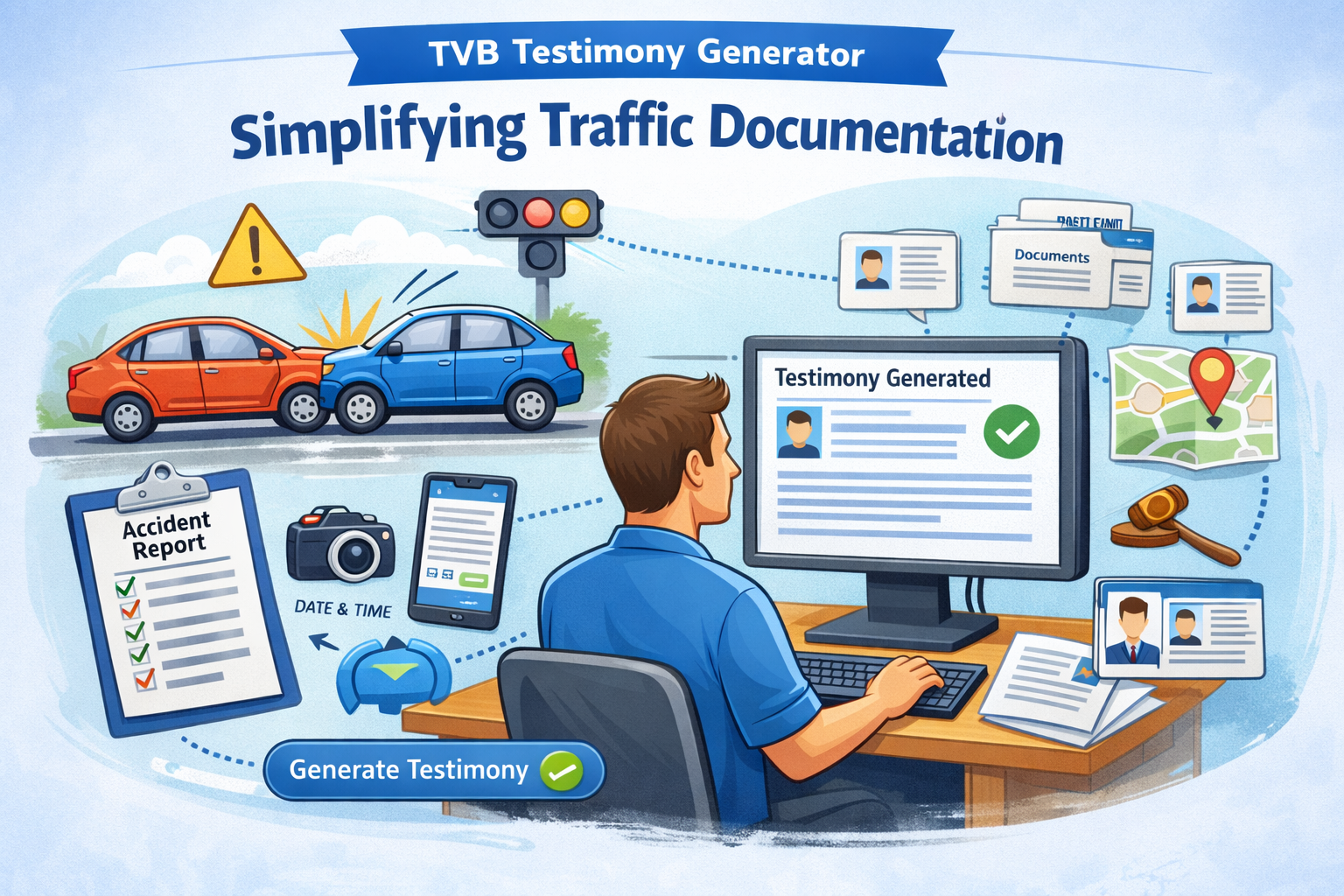
Introduction: Why Traffic Case Documentation Needs a Smarter Approach
Traffic enforcement in New York is not just about issuing summonses—it’s about documentation, accuracy, and accountability. Every traffic stop generates paperwork that must be precise enough to hold up in traffic court. From violation codes to officer notes, even a small inconsistency can delay a case or weaken testimony.
This is where modern digital tools are changing the game. A TVB Testimony Generator is no longer a “nice-to-have” option—it’s becoming a practical necessity for officers and departments aiming to save time, reduce errors, and maintain consistent records.
At Ninetysix.app, the focus is on helping law enforcement professionals simplify documentation while maintaining high standards of accuracy and compliance. In this article, we’ll explore how a TVB Testimony Generator fits into modern policing, how it connects with tools like AI-based summons readers, and why it’s a key part of a smarter law enforcement workflow tool.
Understanding the Documentation Challenge in Traffic Enforcement
Before exploring solutions, it’s important to understand the problem.
Traffic enforcement involves multiple layers of documentation:
- Writing traffic summonses in the field
- Interpreting NY violation codes accurately
- Preparing testimony for the Traffic Violations Bureau (TVB)
- Tracking officer time and overtime
- Ensuring consistency across reports and court documents
Traditional, manual processes make this difficult. Officers often rely on handwritten notes, scanned documents, and memory when preparing testimony days or weeks later. This increases the risk of inconsistencies and consumes valuable time that could be spent on active duty.
This is exactly where a NY police documentation tool designed for automation and clarity becomes critical.
What Is a TVB Testimony Generator?
A TVB Testimony Generator is a digital solution that converts traffic summons data into structured, court-ready testimony. Instead of rewriting details from scratch, officers can rely on accurate, system-generated narratives based on the original summons.
When integrated with other systems—such as a Police OCR summons tool or an AI summons reader—the process becomes even more efficient. Information is extracted directly from summonses and transformed into standardized testimony formats that align with Traffic Violations Bureau requirements.
At its core, a Traffic court testimony generator helps officers:
- Maintain accuracy
- Reduce repetitive paperwork
- Improve documentation consistency
- Prepare faster for court appearances
How a TVB Testimony Generator Streamlines Traffic Case Documentation
1. Eliminates Redundant Manual Work
Manual documentation often means rewriting the same information multiple times. A Summons to testimony app removes this redundancy by converting summons data directly into testimony narratives.
This kind of Officer paperwork automation ensures that officers are not wasting hours re-entering data that already exists in the system.
2. Improves Accuracy with Automated Data Handling
Errors in violation codes or timelines can weaken a case. By integrating NY violation code explanation logic into the system, a TVB Testimony Generator ensures that each violation is clearly described and legally accurate.
This reduces misunderstandings and helps officers confidently explain violations in court.
3. Provides Consistent, Court-Ready Language
One major advantage of using a Traffic court testimony generator is consistency. Courts expect structured, professional language that aligns with legal standards.
With predefined formats and standardized phrasing, the system ensures that testimony:
- Follows a clear narrative flow
- Uses consistent terminology
- Aligns with NY traffic court expectations
This consistency is difficult to achieve manually, especially across multiple officers and precincts.
The Role of AI in Modern Traffic Documentation
AI Summons Reader: Turning Paper into Structured Data
An AI summons reader uses optical character recognition (OCR) and intelligent parsing to read summons documents accurately. When paired with a Police OCR summons tool, handwritten or scanned summonses can be digitized instantly.
This digitization is the foundation of effective officer paperwork automation. Without clean data, automation is impossible.
NY Traffic Summons Examples as a Training Base
Systems built around NY traffic summons examples help ensure that AI understands real-world formatting, abbreviations, and writing styles used by officers. This improves recognition accuracy and reduces misinterpretation.
Over time, AI models become more reliable, making the entire workflow faster and more dependable.
Supporting Officer Time Management and Overtime Tracking
Why Overtime Documentation Matters
Court appearances often happen outside standard shifts. Without accurate tracking, departments struggle to manage budgets and officer workloads.
A well-designed Police overtime recorder simplifies this process by logging time spent on documentation and court preparation. When paired with department overtime tracking, departments gain visibility into how much time is being spent on administrative tasks versus active policing.
Reducing Overtime Through Automation
By automating testimony creation with a TVB Testimony Generator, officers spend less time preparing for court. This directly impacts overtime reduction and improves operational efficiency.
Automation isn’t about replacing officers—it’s about giving them better tools to manage time effectively.
Building a Smarter Law Enforcement Workflow
The Importance of Integrated Tools
A standalone app can help, but true efficiency comes from integration. A modern Law enforcement workflow tool connects multiple processes into one seamless system:
- Summons digitization
- Violation interpretation
- Testimony generation
- Time and overtime tracking
A NY police documentation tool like Ninetysix.app is designed with this integrated approach in mind, ensuring that data flows smoothly from one stage to the next.
Officer Paperwork Automation as a Force Multiplier
Paperwork automation doesn’t reduce accountability—it strengthens it. With automation:
- Records are easier to audit
- Errors are easier to identify
- Documentation is more transparent
This benefits officers, supervisors, and the court system alike.
Why Consistency Matters in Traffic Court Testimony
In traffic court, consistency builds credibility. When testimony aligns perfectly with the original summons and recorded details, it strengthens the officer’s position.
A Traffic court testimony generator ensures that every piece of information—location, time, violation description—matches across documents. This reduces the risk of challenges based on discrepancies.
How Ninetysix.app Fits into the Modern Policing Ecosystem
Ninetysix.app is built to support real-world law enforcement needs. As a comprehensive Summons to testimony app, it focuses on accuracy, efficiency, and usability.
By combining features such as:
- AI summons reader
- Police OCR summons tool
- TVB Testimony Generator
- Police overtime recorder
Ninetysix.app acts as a complete NY police documentation tool rather than a single-purpose solution.
Practical Benefits for Officers and Departments
Key Advantages at a Glance
Using a modern Law enforcement workflow tool offers clear benefits:
- Reduced paperwork time
- Improved testimony quality
- Fewer documentation errors
- Better overtime visibility
- Stronger court readiness
These advantages directly support officers in the field and administrators managing resources.
Preparing for the Future of Traffic Enforcement
Technology in law enforcement is evolving rapidly. Departments that adopt intelligent tools today will be better prepared for increasing documentation demands tomorrow.
A TVB Testimony Generator, supported by AI and OCR technologies, represents a shift toward smarter, more reliable traffic case management.
Rather than reacting to paperwork overload, departments can proactively streamline processes and improve outcomes for officers and the courts.
Conclusion: Streamline Documentation Without Compromising Accuracy
Traffic case documentation doesn’t have to be slow, repetitive, or error-prone. With the right tools, officers can focus on enforcement while technology handles the administrative load.
A TVB Testimony Generator, combined with AI-powered reading, officer paperwork automation, and accurate overtime tracking, transforms how traffic cases are prepared and presented.
If your department is looking for a smarter, more efficient way to manage traffic documentation, Ninetysix.app offers a modern solution built specifically for today’s law enforcement needs.
Take the next step toward streamlined documentation—explore how Ninetysix.app can support your workflow today.
Stay connected with Ninetysix.app beyond the blog. Follow us on Instagram for quick tips, product updates, and insights on smarter law enforcement documentation. Join the conversation and see how modern tools are transforming daily workflows—one case at a time.
FAQs
1. How does a TVB Testimony Generator improve traffic court preparation?
A TVB Testimony Generator automatically converts summons data into structured testimony, reducing manual effort and ensuring accuracy and consistency for traffic court appearances.
2. Can an AI summons reader handle handwritten NY traffic summonses?
Yes, when trained on real NY traffic summons examples, an AI summons reader combined with a Police OCR summons tool can accurately digitize handwritten and scanned documents.
3. How does officer paperwork automation impact overtime?
By reducing time spent on documentation, officer paperwork automation lowers the need for extended hours, supporting better department overtime tracking and budget control.
4. Is a Summons to testimony app secure for law enforcement use?
A professional Summons to testimony app is designed with data security and compliance in mind, ensuring sensitive information is protected throughout the workflow.
5. Why is an integrated law enforcement workflow tool important?
An integrated law enforcement workflow tool connects documentation, testimony generation, and time tracking into one system, improving efficiency, accuracy, and accountability across departments.