NYPD Traffic Court Testimony: A Complete Guide for New York Drivers

NYPD Traffic Court Testimony: A Complete Guide for New York Drivers

June 30, 202613 views

This guide explains how NYPD Traffic Court Testimony works during New York traffic hearings. It covers common traffic violations, testimony examples, violation codes, court procedures, and the digital tools police officers use for documentation and testimony preparation. The article helps drivers understand what to expect and how to prepare for a traffic court hearing.

Getting a traffic ticket in New York can feel stressful. Many drivers worry about court hearings, fines, and points on their driving record. If your ticket requires a hearing, you may hear the police officer give NYPD traffic court testimony. Understanding how this process works can help you feel more confident before your hearing.

This guide explains what happens during a traffic court hearing, how testimony is presented, common traffic violations, and the tools police officers use to prepare documentation. Everything is written in simple English so anyone can understand it.

What Is NYPD Traffic Court Testimony?

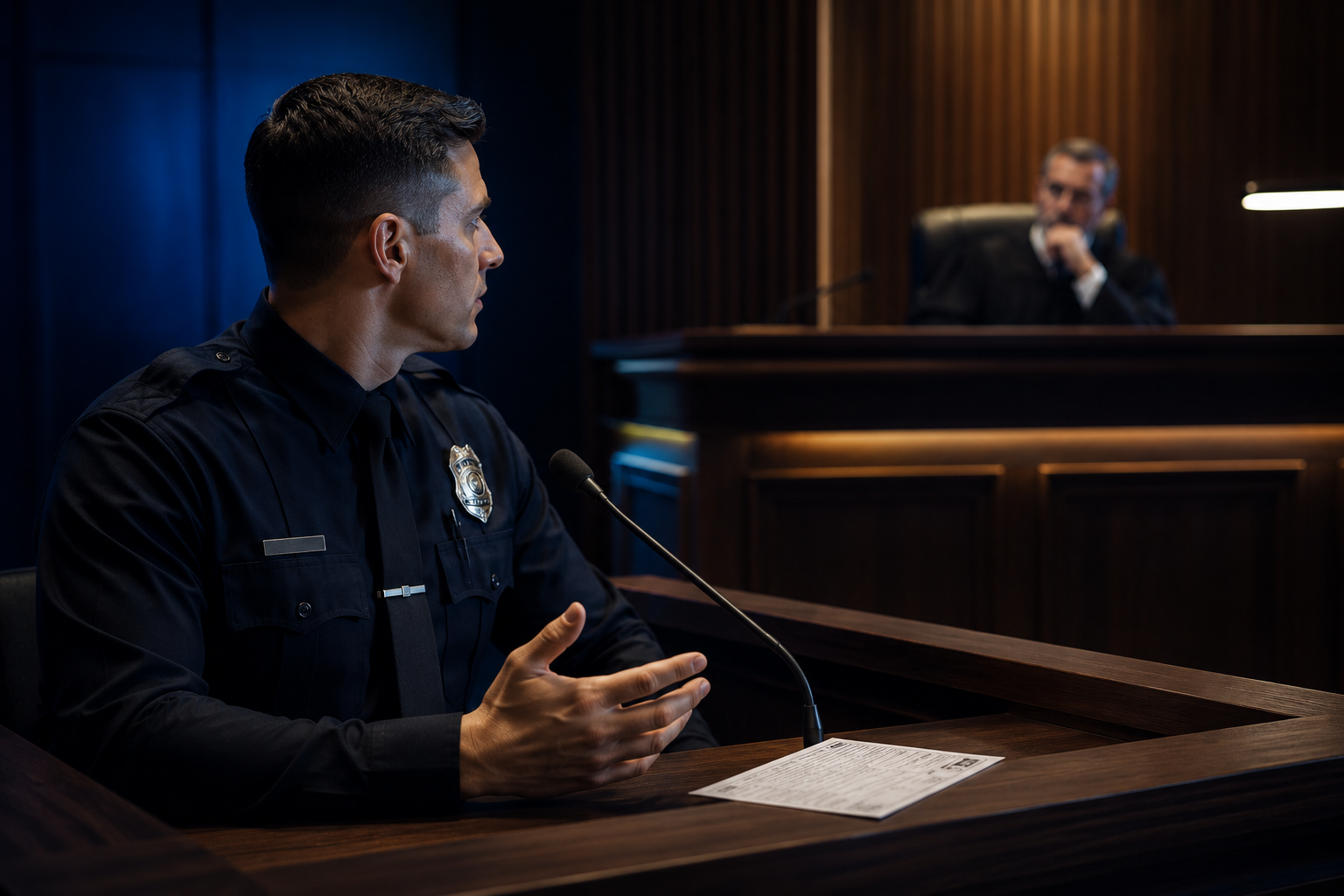
NYPD traffic court testimony is the statement a police officer gives during a traffic hearing. The officer explains what they saw, why they stopped the vehicle, and which traffic law they believe was violated.

The testimony usually follows a clear order. The officer describes the location, time, weather, traffic conditions, and the driver's actions. The judge then considers this information along with any evidence presented by the driver.

Good testimony is based on facts, not opinions. That is why officers carefully review their notes before appearing in court.

What Happens During a Traffic Violation Hearing?

Most New York traffic tickets are handled by the Traffic Violations Bureau (TVB). During the hearing, both sides have the chance to present information.

The general process includes:

  1. The officer explains the incident.
  2. The driver may ask questions.
  3. The driver presents their side of the story.
  4. The judge reviews the evidence.
  5. A decision is made.

Some drivers search for a TVB testimony sample before their hearing. While examples help explain the process, every case is different. Each hearing depends on the actual facts and evidence.

Understanding Traffic Violation Testimony

Every Traffic violation testimony NY follows a similar structure. Officers explain exactly what happened without adding unnecessary details.

For example, they usually describe:

  1. The exact location.
  2. The date and time.
  3. Road and weather conditions.
  4. Traffic signs or signals.
  5. The driver's actions.
  6. The specific traffic law involved.

This organized approach helps the judge understand the situation clearly.

Common New York Traffic Violations

Different violations require different testimony.

VTL 1110(a)

VTL 1110a testimony normally involves failing to obey official traffic control devices. Officers explain which sign or signal the driver ignored and how they observed the violation.

VTL 1111(d)(1)

A VTL 1111d1 testimony usually relates to failing to stop at a steady red traffic signal. Officers often describe the traffic light, vehicle movement, and intersection conditions.

VTL 1180(d)

A VTL 1180d speeding testimony explains how speeding was detected. The officer may describe radar readings, pacing methods, or other approved speed measurement techniques.

Traffic Rule 4-03(a)(1)

Traffic Rule 4-03(a)(1) testimony commonly involves parking or standing violations. Officers identify the location and explain why the vehicle violated local traffic rules.

Failure to Yield

A Failure to yield NY testimony explains who had the legal right of way. The officer describes traffic movement, nearby vehicles, pedestrians, and the driver's actions.

Improper Turn

An Improper turn NY testimony usually explains how the driver turned incorrectly. The testimony may include lane position, road markings, traffic signs, and vehicle movement.

Understanding New York Traffic Codes

Many drivers become confused after receiving a traffic ticket because they do not understand the listed violation code.

Fortunately, several online resources offer NY summons code lookup services. These tools help drivers identify the exact law listed on their ticket.

Likewise, a NY traffic code search allows users to locate traffic laws quickly. Some websites also provide a simple NY violation code explanation, making legal terms easier to understand.

Learning these codes before your hearing helps you prepare better.

Reviewing Traffic Summons Examples

Looking at NY traffic summons examples can help drivers understand how tickets are written.

A typical summons contains:

  1. Date and time
  2. Officer information
  3. Vehicle information
  4. Violation code
  5. Court location
  6. Hearing instructions

Reading examples does not predict your outcome, but it helps you understand the document more clearly.

How Police Officers Prepare for Court

Police officers spend time reviewing reports before every hearing.

Today, many departments use technology to reduce paperwork and improve accuracy.

For example, a Police OCR summons tool can scan printed summons and convert them into digital records.

An AI summons reader automatically extracts important information from the ticket, reducing manual data entry.

Some agencies also use a Traffic court testimony generator to organize case notes into a structured testimony draft. These systems help officers prepare faster while ensuring consistency.

However, officers always review and verify every report before appearing in court.

Modern Documentation Tools

Technology continues to improve law enforcement documentation.

Many agencies now use a Summons to testimony app that converts summons details into organized reports.

A complete NY police documentation tool may include report writing, digital evidence storage, summons management, and testimony preparation.

Departments also invest in Law enforcement workflow tool platforms that connect multiple administrative tasks into one system.

These tools save time while improving documentation quality.

Managing Overtime and Administrative Work

Court appearances often require officers to work beyond their regular shift.

Because of this, many departments use a Police overtime recorder to track extra hours accurately.

Some systems also support NYPD overtime tracking, making payroll and scheduling much easier.

Although drivers rarely see this process, accurate overtime records help departments manage court-related work efficiently.

Tips for Drivers Before Court

If you must attend a traffic hearing, preparation is important.

Keep these tips in mind:

  1. Read your summons carefully.
  2. Understand the violation listed.
  3. Gather supporting documents.
  4. Arrive early.
  5. Dress neatly.
  6. Speak politely.
  7. Answer questions honestly.
  8. Stay calm throughout the hearing.

Good preparation helps you present your case more confidently.

Common Mistakes Drivers Should Avoid

Many drivers make simple mistakes that can hurt their case.

Avoid these common problems:

  1. Missing your hearing date.
  2. Interrupting the judge.
  3. Arguing with the officer.
  4. Bringing incomplete documents.
  5. Guessing answers.
  6. Ignoring court instructions.

Instead, stay respectful and focus on the facts.

Final Thoughts

Traffic court may seem complicated at first, but understanding the process makes it much easier. Learning how NYPD traffic court testimony works gives drivers a better idea of what to expect during a hearing.

Whether you are reviewing traffic laws, searching for a TVB testimony sample, checking a violation code, or learning about modern police documentation systems, good information helps you prepare with confidence. Remember that every case is unique, and the final decision depends on the evidence presented during the hearing.

For more updates and details, visit our Instagram Page!

Share this article