 NinetySix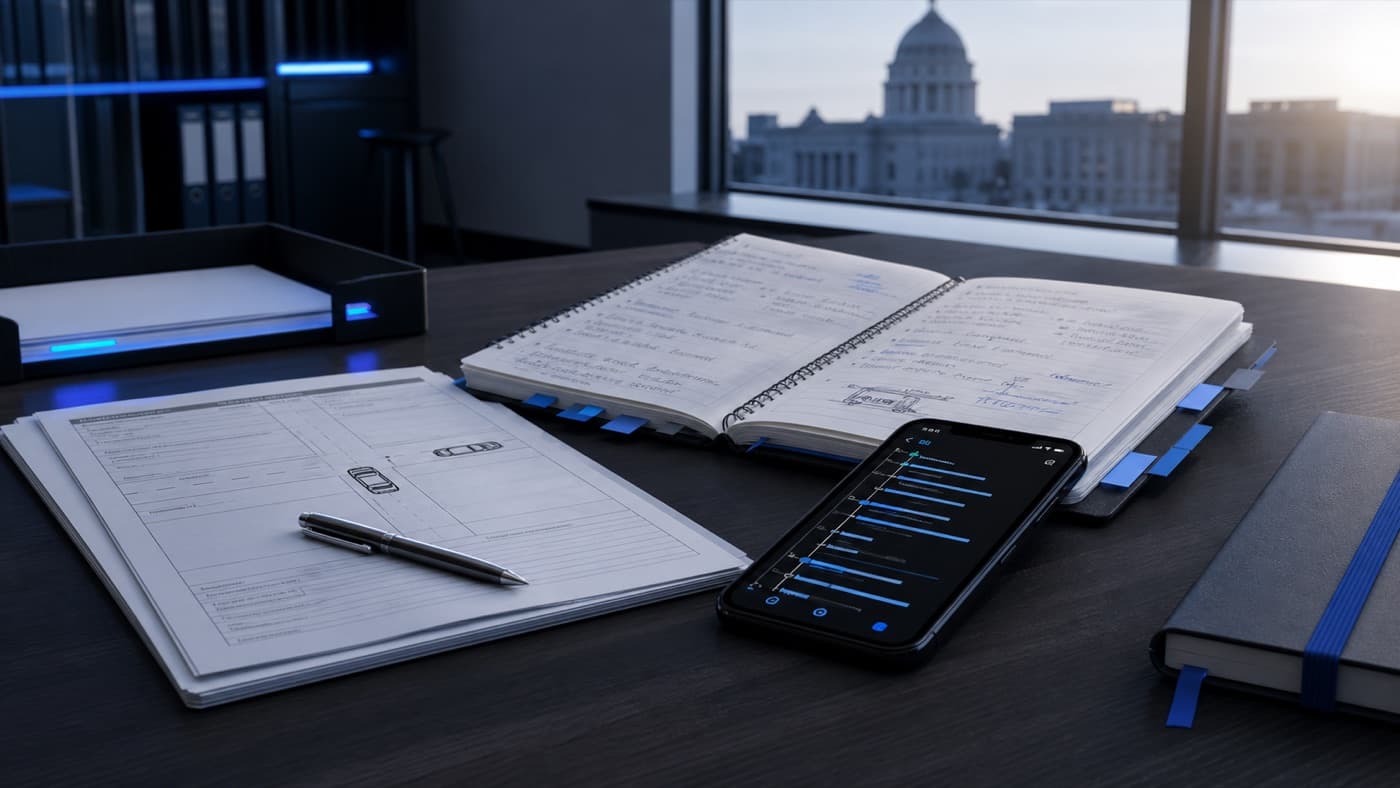
Traffic laws and court procedures vary across the United States. Still, officers everywhere face the same challenge: preparing for court weeks or months after a traffic stop.
A consistent workflow helps officers return to the original record, verify key information, and organize a clear chronology without relying on guesswork. NinetySix was built as a nationwide traffic-court preparation platform to support that work while keeping officer review in control.
This article is educational. Always follow applicable law, local court rules, prosecutor guidance, and agency policy.
START WITH THE ORIGINAL RECORD
Begin with the summons and any contemporaneous records your agency permits you to review.
Confirm the date, time, location, vehicle information, charged violation, and documented observations supporting the enforcement action.
If a detail is not documented and you do not independently recall it, do not add it simply to make the account sound complete.
VERIFY THE VIOLATION CODE
Violation-code language differs by jurisdiction. Confirm the code and description through an authoritative source approved for your location and agency.
A code-lookup tool can reduce search time, but officers remain responsible for verifying that the current provision applies.
BUILD A CLEAR CHRONOLOGY
Organize the event in the order it occurred.
A useful preparation sequence may include the initial observation, continued observation, vehicle stop, driver interaction, verification steps, enforcement decision, and summons issuance.
The goal is not to memorize a script. It is to arrange documented facts so you can explain the event accurately in your own words.
SEPARATE FACTS FROM ASSUMPTIONS
Review every sentence and ask:
• Is this detail in my authorized records?
• Do I independently remember it?
• Is the wording factual?
• Does it add a conclusion the record does not support?
Flag uncertainty rather than filling gaps. Clear limits are more reliable than invented transitions.
USE TECHNOLOGY AS A DRAFTING AID
A traffic-court preparation platform can handle repetitive organization and formatting. It cannot determine what happened or testify for an officer.
Check every generated draft against the original record. Remove unsupported wording and follow agency rules for AI-assisted tools, sensitive data, retention, disclosure, and device use.
HOW NINETYSIX HELPS
NinetySix is built for law-enforcement officers nationwide. From a summons image, it can extract key details and create an editable traffic-court testimony preparation draft for officer review.
The platform also includes saved summons information, violation-code lookup, overtime recording, a private officer dashboard, web access, and an iPhone app.
Summons images are processed and discarded. Officers control and review every final draft.
Prepare on the web:
https://www.ninetysix.app
Download NinetySix for iPhone:
https://apps.apple.com/us/app/ninetysix-snap-generate/id6737232011
NATIONWIDE PREPARATION CHECKLIST
Before court:
• Review the original summons and authorized records.
• Verify the applicable violation code.
• Organize the event chronologically.
• Remove unsupported language.
• Protect sensitive information.
• Review every technology-assisted draft.
• Prepare to testify from your own recollection and permitted records.
Laws differ across jurisdictions, but disciplined preparation remains valuable everywhere. NinetySix gives officers one private platform for organizing that work while leaving facts, judgment, and final testimony where they belong—with the officer.