 NinetySix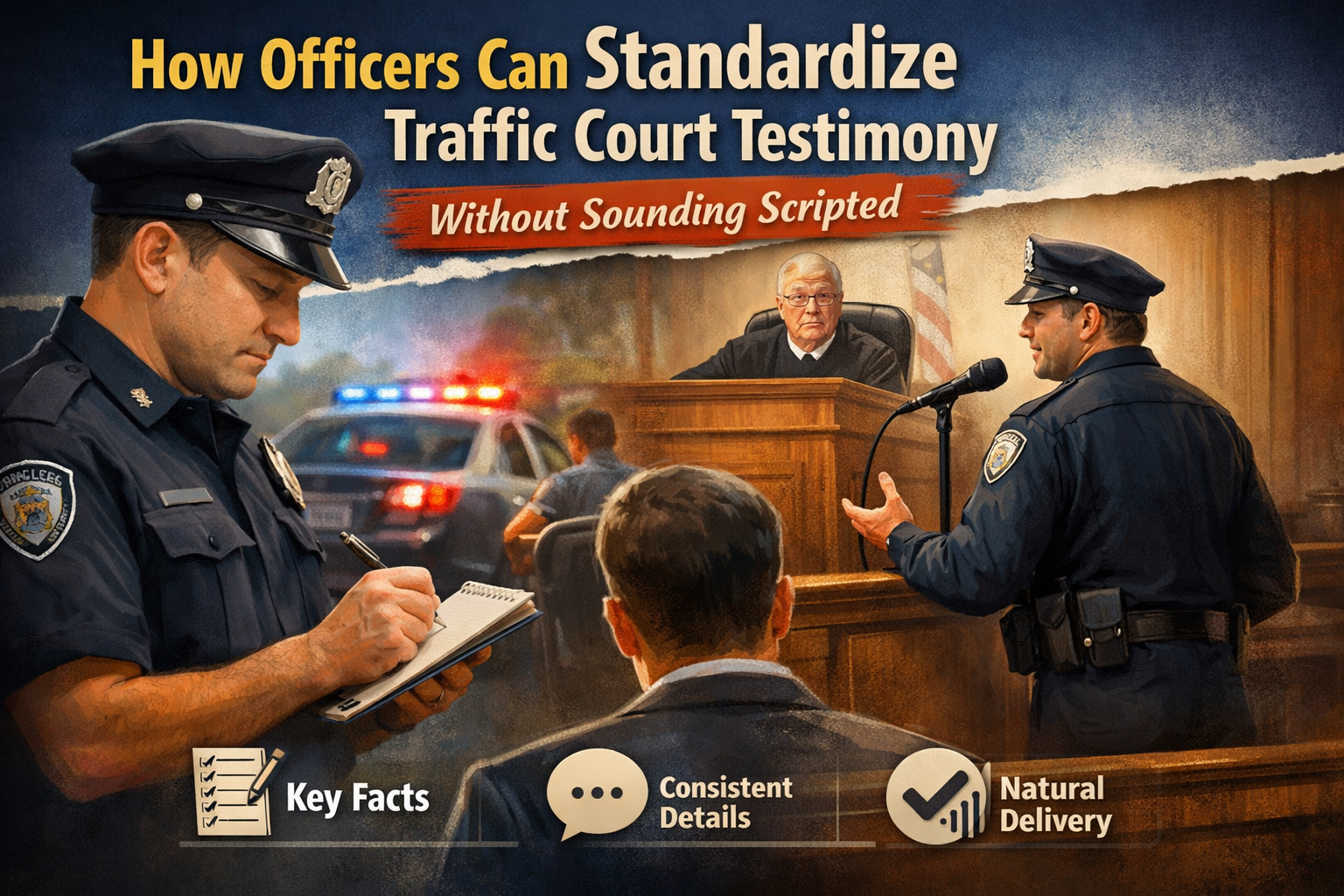
Traffic court testimony is a key part of police work. Officers must explain violations clearly and accurately. Many officers struggle with keeping testimony consistent while avoiding a scripted tone.
Consistency is important because judges rely on precise details. At the same time, testimony should sound natural, not robotic. Balancing accuracy with a conversational tone can be challenging.
Why Consistency Matters
Officers handle many traffic cases daily. Each case requires clear, accurate testimony. Inconsistent testimony can confuse judges or weaken the case.
For example, when giving Improper turn NY testimony, officers must describe exactly what happened. They should include the vehicle’s movement, location, and surrounding conditions. Consistent reporting ensures clarity in court.
The Problem with Sounding Scripted
Officers sometimes memorize statements word-for-word to avoid mistakes. While this seems safe, it can make testimony sound stiff or rehearsed. Judges prefer clear, straightforward explanations that show understanding.
Memorized scripts can also cause hesitation. If a question differs slightly from what’s rehearsed, officers may struggle to answer naturally. This can affect credibility.
Using Summons and Documentation to Standardize
Accurate documentation is key to consistent testimony. Officers can refer to well-prepared summons notes and violation records.
Tools like the NY summons code lookup and the NY traffic code search allow officers to quickly verify violation codes. Similarly, NY violation code explanation tools help clarify legal terms for clear courtroom explanations.
Reviewing NY traffic summons examples also gives officers insight into how to structure testimony without reading from a script.
The Role of Technology
Digital tools make standardization easier and reduce errors. These tools help officers prepare testimony efficiently without sounding robotic.
AI and OCR Tools
- Police OCR summons tool scans and organizes summons details quickly.
- AI summons reader highlights important information for testimony preparation.
These tools save time and reduce reliance on memory, making officers’ responses more accurate and consistent.
Testimony Generators and Workflow Tools
- Traffic court testimony generator structures testimony based on summons data.
- Summons to testimony app converts notes into court-ready statements.
- Officer paperwork automation and the NY police documentation tool streamline paperwork and reduce errors.
- The law enforcement workflow tool integrates all tasks, making preparation more efficient.
Using these tools ensures testimony is standardized while remaining natural.
Tips to Sound Natural
Even with digital preparation, officers should avoid sounding like they are reading a script. Here are practical tips:
- Use Simple Language – Short, clear sentences are easier for judges to understand.
- Practice Conversational Tone – Speak as if explaining the situation to a colleague, not reading notes.
- Highlight Key Facts – Focus on location, vehicle movement, and violation details.
- Refer to Documentation – Check digital notes when needed, but summarize in your own words.
- Review Before Court – Familiarity with facts helps officers sound confident and natural.
Benefits of Standardized, Natural Testimony
- Increases Credibility – Judges trust consistent and accurate testimony.
- Reduces Errors – Verified documentation prevents mistakes.
- Saves Time – Less preparation stress and fewer revisions.
- Improves Confidence – Officers feel prepared without memorizing scripts.
- Enhances Efficiency – Tools like the Police overtime recorder and department overtime tracking help manage extra hours and workload.
How Ninetysix Helps Officers
Ninetysix is a smart tool for officers to prepare natural, standardized testimony:
- Converts summons into structured testimony using the Traffic Court Testimony Generator
- Provides Summons to testimony app for easy conversion of notes
- Tracks violation codes and overtime efficiently with the NY police documentation tool and digital logs
- Reduces errors with AI tools like AI Summons Reader and Police OCR Summons Tool
Using Ninetysix helps officers save time, improve accuracy, and maintain a natural speaking style in court.
Best Practices for Using Tools
- Scan summons with the Police OCR summons tool for quick review.
- Highlight key details with an AI summons reader to focus on important facts.
- Use Officer paperwork automation to reduce manual errors.
- Track overtime efficiently using the Police overtime recorder or the department overtime tracking.
- Review testimony in your own words before court to maintain a natural tone.
Conclusion
Officers can standardize traffic court testimony without sounding scripted by combining accurate documentation, digital tools, and natural delivery. Manual methods or strict memorization are no longer enough.
Using the Traffic court testimony generator, the Summons to testimony app, and other digital tools ensures testimony is consistent, accurate, and confident. This approach saves time, reduces stress, and improves credibility in court.
Want to learn how to standardize your traffic court testimony effectively? Follow our Instagram page for tips, tools, and officer resources.
FAQs
1. Why should officers avoid sounding scripted?
Scripted testimony can sound stiff, reducing credibility in court.
2. How can testimony be standardized without memorization?
Use summons, documentation, and tools like Ninetysix to structure facts naturally.
3. What is a traffic court testimony generator?
It converts summons data into structured, court-ready testimony.
4. How do AI tools help officers?
AI summons readers, and OCR tools highlight key details and reduce errors.
5. Can digital tools reduce stress in court?
Yes, they streamline preparation, improve accuracy, and save time for officers.