 NinetySix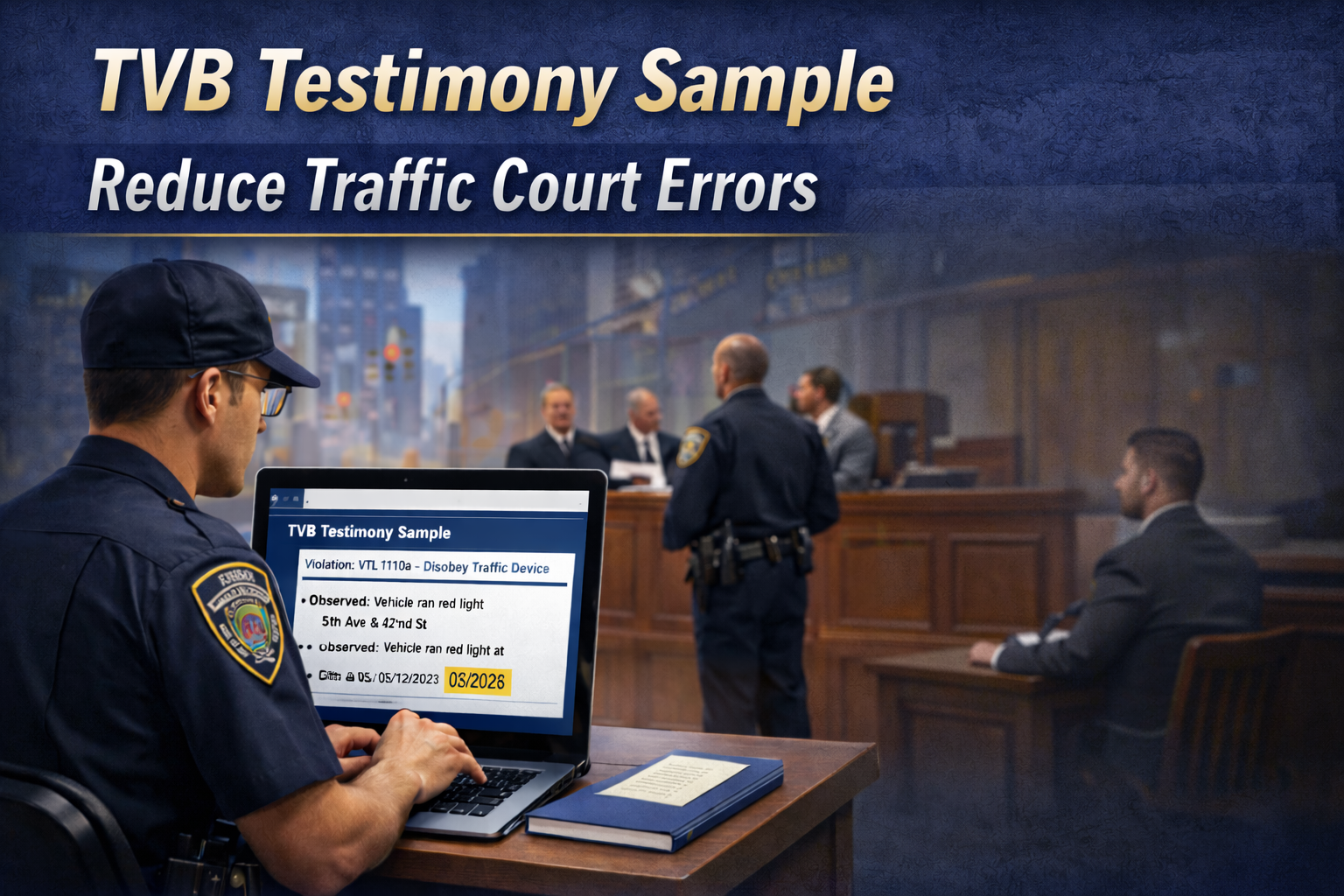
Introduction: Why Small Errors Create Big Problems in Traffic Court
In New York traffic courts, small mistakes can have serious consequences. A missed detail, an unclear explanation, or an incorrect violation reference can weaken a case—even when the stop itself was completely valid. For officers, preparing traffic court testimony isn’t just about showing up; it’s about accuracy, clarity, and consistency.
Yet traffic court preparation has traditionally relied on memory, handwritten notes, and manual documentation. Over time, this leads to inconsistencies, avoidable courtroom errors, and unnecessary challenges during hearings.
This is where modern technology makes a real difference. A well-designed traffic court testimony generator helps officers transform summons data into structured, accurate, and court-ready testimony. Platforms like Ninetysix.app are helping reduce errors across Traffic violation testimony in New York, while also saving time and reducing stress.
Let’s explore how testimony generators work, why courtroom errors happen, and how technology fixes these problems at the source.
Why Courtroom Errors Happen So Often
Even experienced officers face challenges on traffic court days. Errors rarely come from lack of training—they come from process gaps.
Common causes include:
- Relying on memory weeks or months later
- Manual NY summons code lookup errors
- Inconsistent formatting of testimony
- Missing required legal elements
- Fatigue from overtime and paperwork
When preparing traffic court testimony manually, these issues can easily slip through, especially when handling multiple cases in one session.
What Is a Traffic Violation Testimony Generator?
A traffic court testimony generator is a technology-driven tool that converts summons information into structured testimony aligned with New York traffic laws and court expectations.
Instead of rewriting everything manually, officers use a Summons to testimony app that:
- Reads summons data digitally
- Identifies the correct violation
- Applies a legally sound structure
- Generates clear, review-ready testimony
This dramatically improves the quality and consistency of Traffic violation testimony in New York.
Reducing Errors Through Structured Testimony
One of the biggest advantages of a testimony generator is structure. Courts expect clear, logical explanations that address every required element of a violation.
With a generator, testimony follows a consistent format similar to a TVB testimony sample, ensuring nothing critical is left out.
Benefits include:
- Clear sequence of events
- Consistent legal language
- Reduced ambiguity during questioning
- Stronger credibility in court
This consistency directly reduces courtroom errors.
Eliminating Code Confusion with Smart Lookup Tools
New York traffic law includes hundreds of codes. Manually performing a NY traffic code search increases the risk of referencing the wrong statute or misunderstanding its elements.
How Technology Helps
Modern platforms provide instant NY violation code explanation and searchable databases for fast NY summons code lookup. Officers can also review NY traffic summons examples to understand how similar cases are presented.
This clarity strengthens Traffic violation testimony in New York and minimizes errors caused by misinterpretation.
Accuracy in Common NY Traffic Violations
Certain violations are frequently challenged in court and require precise testimony. A generator ensures accuracy across these high-risk cases.
VTL 1110(a): Traffic Control Devices
A proper VTL 1110a testimony must explain the presence of a traffic control device and how it was disobeyed. A generator ensures location, signage, and observation details are always included—reducing omissions that lead to dismissals.
VTL 1111(d)(1): Traffic Signals
With VTL 1111d1 testimony, accuracy around signal color, intersection, and vehicle movement is critical. Automated structuring ensures every required element is clearly documented.
VTL 1180(d): Speeding Violations
Speeding cases demand precision. A strong VTL 1180d speeding testimony includes the speed estimation method, traffic conditions, and roadway type. A generator reduces inconsistencies and missing details that are often exploited in court.
Movement Violations Without Confusion
Movement-based violations are some of the hardest to explain clearly in traffic court.
Examples include:
- Traffic Rule 4-03(a)(1) testimony
- Failure to yield NY testimony
- Improper turn NY testimony
These cases rely heavily on situational clarity.
How Generators Reduce Errors
By using saved summons data and standardized language, generators translate complex roadway situations into clear explanations. This prevents confusion and helps hearing officers understand the violation quickly and accurately.
OCR and AI: Preventing Errors at the Source
Courtroom errors often begin at the documentation stage. Illegible handwriting or incomplete notes can weaken testimony before the court even begins.
A Police OCR summons tool digitizes summonses instantly, while an AI summons reader interprets the data accurately.
Together, they ensure:
- No loss of original details
- Reduced transcription errors
- Faster review before the court
This accuracy flows directly into better traffic court testimony.
Reducing Fatigue-Related Errors
Administrative fatigue plays a major role in mistakes. Long shifts followed by hours of paperwork increase the chance of oversight.
Automation Makes the Difference
With Officer paperwork automation, officers spend less time rewriting information and more time reviewing quality. Integrated systems also support accurate logging through a Police overtime recorder, improving department overtime tracking.
When fatigue drops, accuracy rises.
One Platform, Fewer Mistakes
Using disconnected tools increases the chance of errors. A centralized NY police documentation tool eliminates that problem by keeping everything in one system.
As a complete Law enforcement workflow tool, it supports:
- Summons digitization
- Code lookup and explanation
- Testimony generation
- Reporting and review
Fewer handoffs mean fewer mistakes.
Why Ninetysix.App Helps Reduce Courtroom Errors
Ninetysix.app is designed specifically to support New York officers and traffic court workflows.
As a purpose-built NY police documentation tool, it helps reduce errors by:
- Generating structured testimony automatically
- Supporting OCR and AI-based data capture
- Providing accurate code explanations
- Streamlining paperwork and overtime tracking
By functioning as a comprehensive Law enforcement workflow tool, Ninetysix.app ensures officers arrive in court prepared, confident, and accurate.
The Ripple Effect: Better Testimony, Better Outcomes
When courtroom errors are reduced, everyone benefits:
- Officers face fewer challenges
- Hearings move faster
- Courts operate more efficiently
- Public trust improves
High-quality traffic court testimony leads to fairer and more consistent outcomes across New York traffic courts.
Conclusion: Accuracy Is No Longer Optional
In today’s traffic courts, accuracy isn’t a bonus—it’s a necessity. Manual processes leave too much room for error, especially under pressure.
A modern traffic court testimony generator transforms how Traffic violation testimony in New York is prepared, reviewed, and presented. By combining OCR, AI, and structured workflows, platforms like Ninetysix.app reduce courtroom errors while saving officers time and energy.
Want to reduce mistakes and strengthen your traffic court cases? Discover how Ninetysix.app helps officers prepare accurate, court-ready testimony every time.
Get real-world insights on AI, traffic documentation, and officer workflows. Follow Ninetysix.app on Instagram!
Frequently Asked Questions (FAQs)
1. How does a traffic court testimony generator reduce errors?
It ensures all required legal elements are included, uses a consistent structure, and minimizes manual mistakes.
2. Can AI-generated testimony be used directly in court?
AI-generated drafts support officers, but testimony should always be reviewed and finalized by the officer before court.
3. Does OCR really improve testimony accuracy?
Yes. A Police OCR summons tool captures original details precisely, reducing transcription errors.
4. How does automation affect overtime?
With Officer paperwork automation, officers spend less time on admin work, improving department overtime tracking and reducing fatigue.
5. Who benefits most from tools like Ninetysix.app?
Traffic officers, supervisors, and departments handling high volumes of summonses benefit from fewer errors and faster preparation.